Pterygium Surgery Q&A
Learn about pterygium (often called surfer’s eye): what causes it, how it develops, when pterygium surgery may be recommended, what happens during the procedure, and what recovery typically involves.
Information is general in nature and not a substitute for personal medical advice.
Jump to a question
- 1. What is a pterygium (surfer’s eye)?
- 2. How does a pterygium develop?
- 3. Is pterygium surgery always necessary?
- 4. How can I slow down pterygium growth?
- 5. When is the right time to have surgery?
- 6. What happens during pterygium surgery?
- 7. Do I need someone to drive me home?
- 8. Public vs private hospital: what’s different?
- 9. How do I access private pterygium surgery?
- 10. What are possible complications?
- 11. Post-operative care and recovery
- 12. When can I drive again?
- 13. Can I shower after surgery?
- 14. When can I return to work?
Q
How do I get a pterygium? What is a pterygium?
How do I get a pterygium? What is a pterygium?
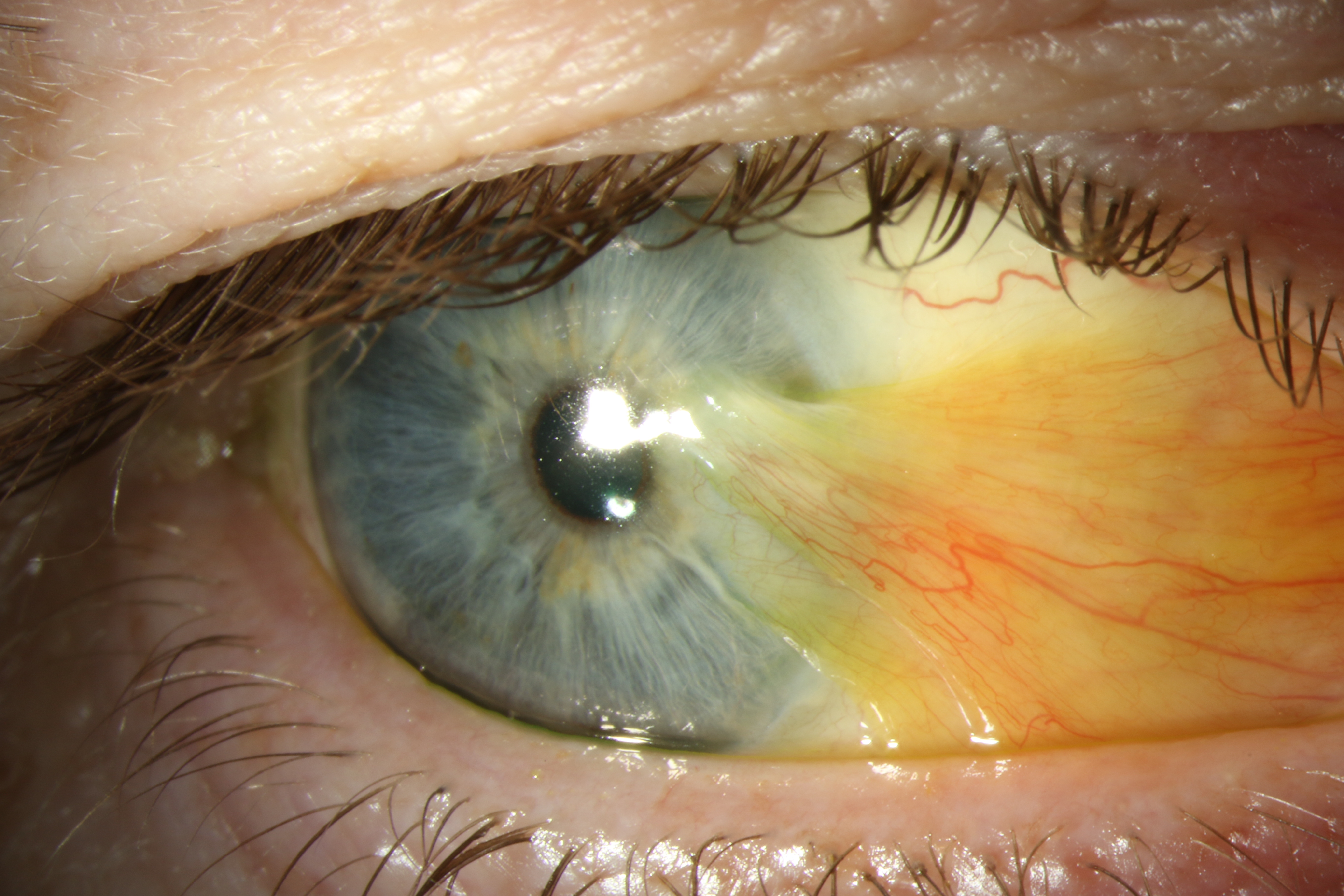
A pterygium is a non-cancerous growth of fleshy tissue that develops on the white part of the eye and can slowly extend onto the clear front surface of the eye (the cornea). It is often shaped like a small wedge and is sometimes called a “surfer’s eye.” Pterygiums are mainly caused by long-term exposure to ultraviolet (UV) light from the sun, which is why they are more common in people who spend a lot of time outdoors. Wind, dust, and dry conditions can also contribute.
Q
How does a pterygium develop?
How does a pterygium develop?
When the cornea of the eye is exposed to the sun’s UV rays, the clear tissue acts as a magnifying glass and to concentrate its beam onto the more nasal side of the eye to damage limbal stem cells which then initiates this growth, first as a pinguecula and then as a pterygium once it grows onto the cornea.
Q
Is pterygium surgery always necessary?
Is pterygium surgery always necessary?
Pterygium surgery is not always necessary. Many pterygiums remain small and cause only mild redness or irritation, which can often be managed with lubricating eye drops and protection from sun, wind, and dust. Surgery is usually considered only if the pterygium is growing toward the center of the cornea and affecting vision, causing significant discomfort, or becoming cosmetically bothersome. Your eye doctor will monitor its size and progression and recommend surgery only if it begins to threaten your sight or quality of life.
Q
How do I slow down the development of a pterygium?
How do I slow down the development of a pterygium?
You can help slow down the development of a pterygium by protecting your eyes from ultraviolet (UV) light and environmental irritation. Wear sunglasses with strong UV protection whenever you are outdoors, and consider a wide-brimmed hat for extra shielding. Try to avoid dusty, windy, and very dry conditions where possible, and use lubricating eye drops to keep your eyes moist and comfortable. These steps can reduce ongoing irritation and may help limit further growth.
Q
When is it the right time to have pterygium surgery?
When is it the right time to have pterygium surgery?
Pterygium surgery is usually recommended when it begins to affect your vision, comfort, or daily life. If the pterygium grows large enough to blur vision, distort the shape of the cornea (causing astigmatism), or threaten to grow over the pupil and block light, surgery may be necessary to protect your sight. It may also be considered if you have ongoing redness, irritation, burning, tearing, or discomfort that does not improve with drops. Some people choose surgery for cosmetic reasons if the pterygium becomes very noticeable, or if it interferes with wearing contact lenses comfortably. Your eye doctor can advise you on the right timing based on its size and progression.
Q
What happens during pterygium surgery? How is pterygium
surgery performed?
What happens during pterygium surgery? How is pterygium surgery performed?
During pterygium surgery, or a pterygium excision and conjunctival autograft, the eye is numbed with drops and a local anesthetic, so you will not feel pain. The surgeon carefully removes the abnormal tissue from the surface of the eye. A small piece of healthy tissue (a conjunctival graft) is taken from another part of your eye and placed over the area to reduce the risk of the pterygium growing back. The graft is secured with special tissue glue. The procedure is usually done as day surgery and typically takes about 15-20 minutes.
Q
Will I need someone to drive me to and from hospital on the day of my surgery?
Will I need someone to drive me to and from hospital on the day of my surgery?
Yes, you will need someone to drive you to and from the hospital on the day of your pterygium surgery. For safety reasons, you will not be able to drive yourself home. It’s important to arrange for a family member or friend to accompany you and help you get home comfortably.
Q
What are the differences between the public and private
hospital system?
What are the differences between the public and private hospital system?
Both systems provide equally good care. Public surgeries are performed at Kurri Kurri district hospital and Belmont Hospital. Private surgeries are performed at Charlestown Private Hospital.
The main differences between both systems is that in the public hospital:
- You will not be able to choose your operating doctor. This could be done by one of our trainee eye specialists supervised by one of our consultant specialists. This is a very safe process, and if the trainee is less experienced, they will to do the easier parts of the procedure under supervision. You may hear the supervising specialist give the trainee instructions during the procedure.
Q
How do I access private pterygium surgery?
How do I access private pterygium surgery?
With the choice of going private, you will definitely be able to choose the surgeon doing your procedure and the wait times are a lot quicker as compared to having it done via the public system.
You can access it either through:
- Private health insurance: Please ensure that you have checked with your health insurance provider that you are covered for the MBS item number 42686
- Self-funding your surgery: You will need to cover the facility cost, anesthetist and surgeon fees.
Q
What are the complications seen in pterygium surgery?
What are the complications seen in pterygium surgery?
Pterygium surgery is generally safe, but as with any procedure, there are potential risks. The most common issue is recurrence, where the pterygium grows back over time. Other possible complications include redness, irritation, infection, bleeding, scarring, or delayed healing. Some patients may experience graft swelling or movement if a conjunctival autograft is used. Very rarely, vision can be affected due to significant scarring or inflammation. Your surgeon takes careful steps to minimise these risks, and most patients recover well without serious problems.
Q
What is the post operative care following pterygium surgery?
What is the post operative care following pterygium surgery?
After pterygium surgery, you will need to use prescribed eye drops for several weeks to reduce inflammation and prevent infection. Your eye may be red, watery, and slightly uncomfortable at first, which is normal. You should avoid rubbing the eye, swimming, dusty environments, and heavy lifting for a short period while it heals. Wearing sunglasses outdoors can help reduce light sensitivity and protect the eye from UV exposure. It’s important to attend your follow-up appointments so your surgeon can monitor healing and check that the graft is settling well.
Q
When can I drive again after pterygium surgery?
When can I drive again after pterygium surgery?
Most people can return to driving within a few days to a week after pterygium surgery, once their vision is clear and comfortable. Your eye may be red, watery, or slightly blurry at first, so it’s important not to drive until you feel confident and can see clearly. You should also make sure your vision meets the legal driving requirements. Your surgeon will advise you at your follow-up visit when it is safe to get back behind the wheel.
Q
Can I take a shower after pterygium surgery?
Can I take a shower after pterygium surgery?
Yes, you can usually shower the day after pterygium surgery, but you need to be careful not to get water, soap, or shampoo directly into your eye for at least the first week. Keep your face turned away from the water stream and avoid rubbing your eye. Gently pat the area dry afterward, and continue using your prescribed eye drops as directed to support proper healing.
Q
How soon can I head back to work after pterygium surgery?
How soon can I head back to work after pterygium surgery?
Most people can return to work within a few days to a week after pterygium surgery, depending on how comfortable their eye feels and the type of work they do. If your job is desk-based and in a clean environment, you may be able to go back sooner. However, if you work outdoors, in dusty conditions, or do heavy physical activity, you may need a little more time off to allow proper healing. Your surgeon will guide you based on your recovery and work demands.