Cataract Surgery Q&A
Clear, practical answers to common cataract and cataract surgery questions
Jump to a question
- Where in the eye is a cataract? What is a cataract?
- How does a cataract blur your vision?
- What are the different causes of a cataract?
- How quickly does a cataract develop?
- What are the symptoms of having a cataract?
- When do I need cataract surgery?
- Is cataract surgery always necessary?
- How is cataract surgery performed?
- What happens on the day of my surgery?
- Will I need someone to drive me to and from hospital on the day of my surgery?
- What are the differences between the public and private hospital system?
- How do I access private cataract surgery?
- What types of intraocular lenses (IOLs) are available?
- What are the complications seen in cataract surgery?
- What is the post operative care following cataract surgery?
- When can I drive again after cataract surgery?
- Can I take a shower after cataract surgery?
- How soon can I head back to work after cataract surgery?
Q
Where in the eye is a cataract? What is a cataract?
The lens is located just behind the iris, the colored part of the eye, and cannot be seen from the outside. It is composed primarily of water and proteins which become change structurally with time, becoming cloudy, becoming what we call a cataract. [Video courtesy of @lidemka]
Q
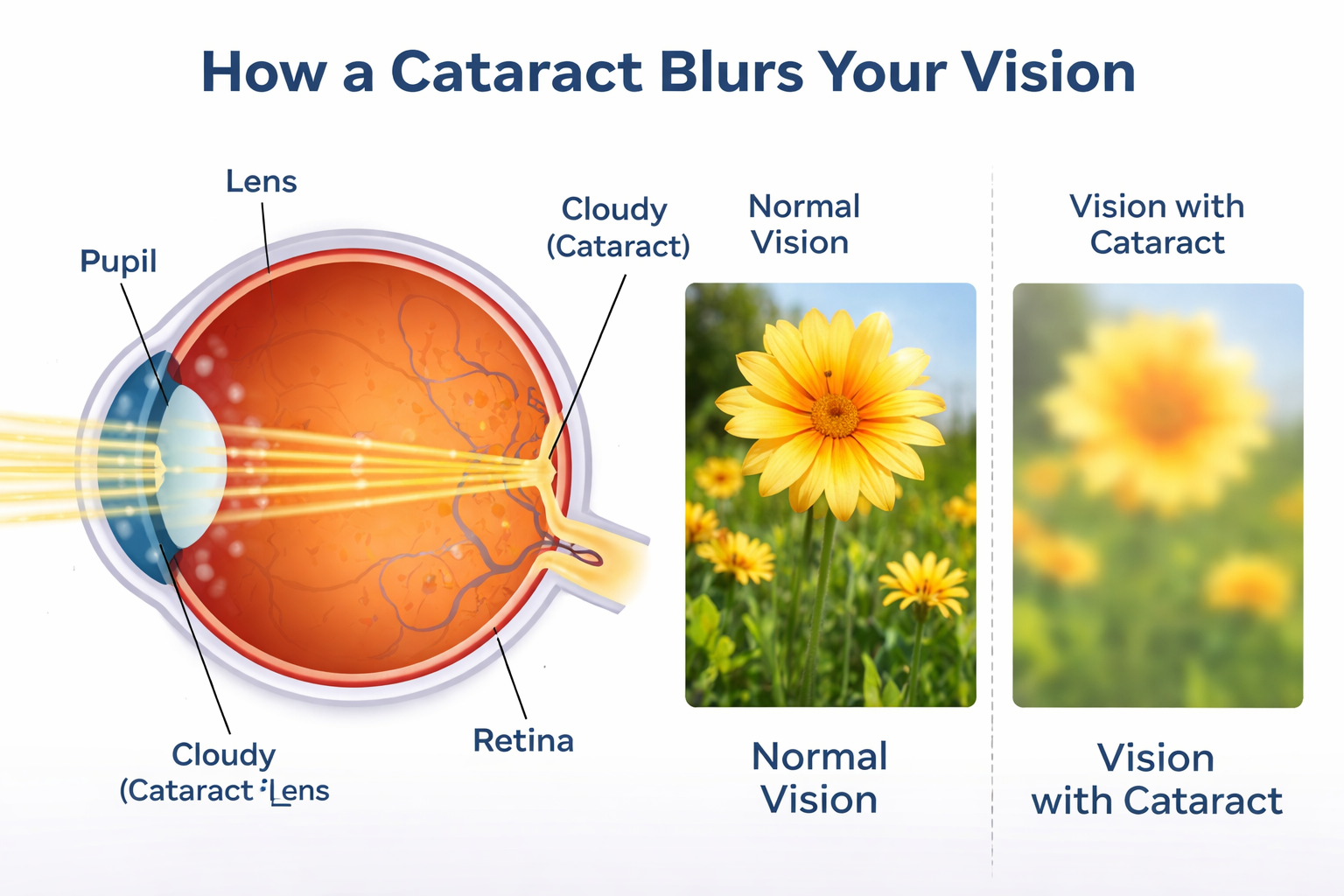
How does a cataract blur your vision?
A cataract blurs your vision because the clear lens inside your eye becomes cloudy. Normally, this lens works like a camera lens, focusing light sharply onto the back of your eye (the retina) so you can see clearly. When a cataract forms, the cloudy lens scatters and blocks light instead of letting it pass through cleanly. This makes images look blurry, dim, hazy, or less colourful—almost like looking through a foggy window. Cataracts usually develop slowly, so vision may gradually become more unclear over time.
Q
What are the different causes of a cataract?
Cataracts can develop for several reasons. The most common cause is aging, as the natural lens of the eye slowly becomes cloudy over time. Other causes include diabetes, long-term use of steroid medications, previous eye injuries or surgery, and too much exposure to ultraviolet sunlight. Smoking and heavy alcohol use can also increase the risk. Some people are born with cataracts, and others may develop them due to certain medical conditions or treatments like radiation. In many cases, cataracts are simply a natural part of getting older.
Q
How quickly does a cataract develop?
Most cataracts develop slowly over several years, especially age-related cataracts. However, some types—such as those related to diabetes, steroid use, or eye injury—can progress more quickly, sometimes over months. The speed can vary from person to person, which is why regular eye exams are important to monitor changes and decide when treatment may be needed.
Q
What are the symptoms of having a cataract?
Common symptoms of a cataract include blurry or cloudy vision, as if you’re looking through a foggy window. You may notice glare or halos around lights, especially at night, making driving more difficult. Colours can appear faded or yellowed, and you might need brighter light for reading. Some people find their glasses prescription changes more often. Cataracts usually develop slowly, so these changes tend to happen gradually over time.
Q
When do I need cataract surgery?
You may need cataract surgery when your vision becomes blurry enough to interfere with your daily activities, such as reading, watching television, working, or especially driving. Many people choose surgery when they feel their quality of life is affected. This is particularly important if your cataract impacts your ability to drive safely.
The Road and Traffic Authority (RTA) has strict vision standards for passing a driver’s test, and if your vision does not meet these requirements because of a cataract, you could lose your license. Surgery is recommended when clearer vision will help you stay safe and maintain your independence.
Q
Is cataract surgery always necessary?
Cataract surgery is not always necessary right away. In the early stages, mild vision changes can often be improved with updated glasses, brighter lighting, or magnification. However, as the cataract becomes more dense, glasses will no longer provide clear vision because the lens itself has become too cloudy. Once it starts to significantly affect your daily activities—such as reading, recognizing faces, or driving—surgery is the only effective way to restore clearer vision.
Q
How is cataract surgery performed?
Cataract surgery is a safe and commonly performed procedure that is usually done as day surgery. Your eye is numbed with drops and a local anesthetic so you will not feel pain. The surgeon makes a tiny incision in the eye, gently breaks up and removes the cloudy lens, and replaces it with a clear artificial lens implant, or the intraocular lens (IOL). The incision is so small that it often heals on its own without stitches. The procedure typically takes about 5–10 minutes, and most people notice clearer vision once the eye pad is removed the day after the procedure.
Q
What happens on the day of my surgery?
Cataract surgery is a day only procedure, so you can expect to be in and out of the hospital within 4-5 hours and home on the same day.
When you arrive at the hospital, you will have your eye checked and prepared with dilating and numbing drops. You’ll receive a local anesthesia with twilight sedation so you will be partially awake during the procedure but relaxed, and you will not feel any pain. Some patients see beautiful lights and hear what is happening during the procedure. The procedure typically takes about 5–10 minutes and before you know it, you’ll be back out in the recovery bay with some food and a cup of tea.
Q
Will I need someone to drive me to and from hospital on the day of my surgery?
Yes, you will need someone to drive you to and from the hospital on the day of your cataract surgery. For safety reasons, you will not be able to drive yourself home. It’s important to arrange for a family member or friend to accompany you and help you get home comfortably.
Q
What are the differences between the public and private hospital system?
Both systems provide equally good care. Public surgeries are performed at Kurri Kurri district hospital and Belmont Hospital. Private surgeries are performed at Charlestown Private Hospital.
The main differences in the public hospital:
- You will not be able to choose your operating doctor. This could be done by one of our trainee eye specialists supervised by one of our consultant specialists. This is a very safe process, and if the trainee is less experienced, they will do the easier parts of the procedure under supervision. You may hear the supervising specialist give the trainee instructions during the procedure.
- For your first eye, you will be placed on a waitlist which is about 1 year in duration. Fortunately, your second eye will be done 3 months from your first procedure.
Q
How do I access private cataract surgery?
With the choice of going private, you will definitely be able to choose the surgeon doing your procedure and the wait times are a lot quicker as compared to having it done via the public system.
You can access it either through:
- Private health insurance: Please ensure that you have checked with your health insurance provider that you are covered for the MBS item number 42702
- Self-funding your surgery: You will need to cover the facility cost, anesthetist and surgeon fees. Costs will vary depending on the type of intraocular lens used.
Q
What types of intraocular lenses (IOLs) are available?
Generally, there are two main types of intraocular lenses (IOLs) used in cataract surgery: monofocal and multifocal lenses.
Monofocal lenses provide clear vision at one set distance (usually distance), but you will still need reading glasses for close work.
Multifocal lenses provide a greater range of vision (near and far) with less dependence on glasses, but some people notice halos or glare, and image sharpness can be slightly reduced.
Please bring in your questions to discuss this with your eye specialist in greater detail.
Q
What are the complications seen in cataract surgery?
Cataract surgery is one of the safest and most commonly performed operations, and serious complications are very rare. Most people heal without any problems. However, as with any surgery, there are small risks, including infection, bleeding, swelling, retinal detachment, or inflammation. Some patients may also experience temporary glare, halos, or a need for further laser treatment later on. Your surgeon takes careful precautions to minimise these risks, and the vast majority of patients have a smooth recovery with significantly improved vision.
Q
What is the post operative care following cataract surgery?
After cataract surgery, you will use prescribed eye drops for several weeks to prevent infection and reduce inflammation. You should avoid rubbing your eye and wear a protective shield at night for the first week. It’s important to keep water, soap, and dust out of the eye. Mild discomfort or blurry vision is normal at first, but your vision should gradually improve over the following days. Be sure to attend your follow-up appointments so your eye doctor can monitor your healing.
Remember, do NOT rub your eye, this is one of the worst things you can do after cataract surgery.
Q
When can I drive again after cataract surgery?
Most people can return to driving within a few days to a week after cataract surgery, but only once their vision is clear and meets the legal driving standards. Your eye needs a short time to heal, and vision may be blurry at first. You should not drive until your eye doctor confirms that your vision is safe and you feel confident behind the wheel. If you are unsure, it’s always best to wait and discuss it at your follow-up appointment.
Q
Can I take a shower after cataract surgery?
You can very cautiously take a shower after cataract surgery, usually starting the day after the procedure. However, it is important to avoid getting water, soap, shampoo, or other products directly into your eye for at least the first week. Use the shower head and spray water from your neck downwards and definitely avoid rubbing your eyes. Gently pat your face dry afterward, and continue using your prescribed eye drops as directed to support healing.
Q
How soon can I head back to work after cataract surgery?
Most people can return to work within a few days after cataract surgery, depending on how quickly their vision clears and the type of work they do. If your job is desk-based or light duty, you may feel comfortable going back within 2–3 days. However, if your work involves heavy lifting, dusty environments, or physical strain, you may need to wait a week or longer. Your eye doctor will advise you based on your recovery and make sure your vision is safe for your specific duties.